Four functions of innovation and technology management

Originally published in November, 2015, revised in March 2018

I would like to continue the “Instigating Innovation” series (see opening post herewhere to start and the post about culture here). The idea behind this series is that I explain innovation management concepts that can be used by both enterprises and technology transfer and industry support institutions.

To recapitulate: I believe that many industries are struggling to modernise because their supporting institutions use completely different frameworks to manage innovation (or perhaps the supporting institutions make their choices as randomly as enterprises do). One of the first concepts that a tech transfer institute or industry support organisation should transfer to enterprises is “how to manage innovation and technology”. Just because there is an engineer or an MBA/PhD in a company does not guarantee effective or creative management of innovation and technology.

Today I shall focus on the four broad functions that must be managed strategically in every enterprise and supporting institution. Even if someone in the organisation has the job title of Innovation Manager or Technology Manager, these functions should still be visible throughout the organisation. In other words, this is not somebody’s job, but it helps if somebody coordinates these activities.

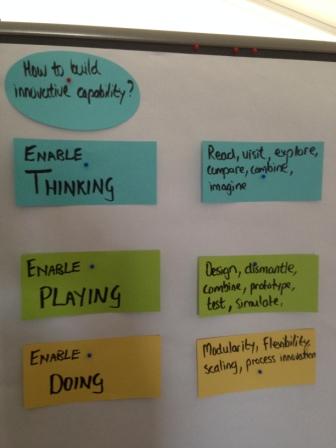
The four functions agreed by most scholars and innovation experts can be summarised roughly as:

  1. Searching and scanning for new ideas and technologies, both within and beyond the organisation. This includes looking at technologies that could affect the clients of the organisation, and technologies that could disrupt markets and industries.
  2. Comparingselecting and imagining how different technologies could impact the organisation, its markets and its own innovation agenda.
  3. Next comes integrating or deploying the technology or innovation into the organisation. This includes adjusting processes and systems, scaling up implementation, and project managing the whole change process.
  4. The last step is often overlooked, but new technology and innovation often make new ideas, innovations and improvements possible. I call this last step exploiting the benefits of a new technology or idea. This could involve leveraging some of the additional benefits or features of a technology, perhaps by creating a new business unit focused on an adjacent market or particular offering.

When I visit institutions, organisations and companies, I always ask “who is thinking about change taking place beyond your industry or key technology?”. I cannot tell you how often I hear that “the CEO” or “the production manager” are on top of new developments and will be attending a tech fair next year. How can this huge responsibility fall on the shoulders of one or two people, who are at the same time biased towards the current strategy which favours justifying past (sunk) investments? Or if you ask “How did you choose between two technologies?”  you will be surprised how little time was spent considering new business opportunities, or how few companies asked for on-site demonstrations or samples from their preferred technology providers.

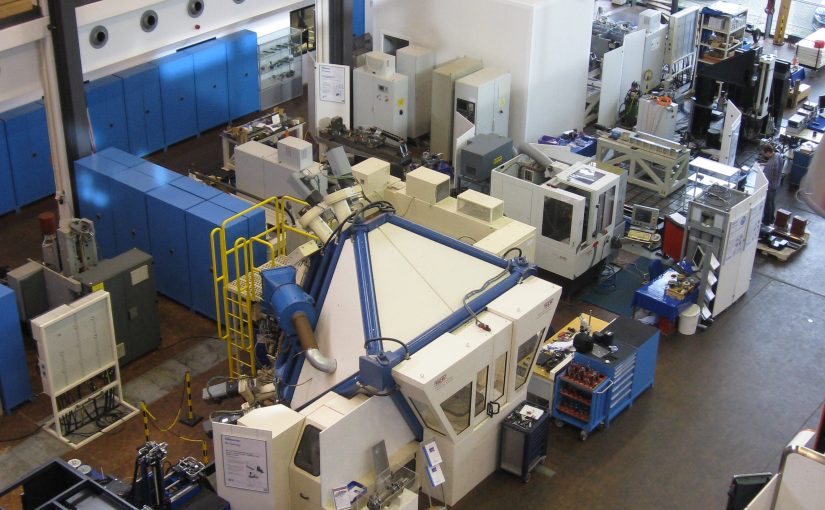
I will refrain from being too critical of technology transfer institutions and industry-supporting organisations, except to say that these organisations should be a prime example to industry of how to scan, evaluate, compare and integrate new ideas and technologies. We don’t just want to see the shiny machines and neat facilities, we want to understand how you arrived at your decisions, and how you made the best of your investments after implementing the change. Furthermore, industry wants to know what’s next, or what’s beyond their vision and how it may affect their industry.

To bring it all together, the technological upgrading of industries is plagued by many different market failures. These failures include the tendency NOT to invest due to high research costs, due to fears about making the wrong choices, or because so many decisions and changes must be made at the same time – this while the business continues, markets fluctuate, and technologies change faster and faster. Companies (and institutions) cannot afford just to kick start innovation management immediately before making a change (or when forced by external forces to make a decision). These functions must be managed strategically on a continuous basis, both at the level of top management and within the different functions of the organisation. Both companies and their supporting institutions need to manage innovation and technology, not only from an operational perspective (striving for continuous improvement, etc.) but also from a strategic point of view.
 

If the culture cannot change then the business cannot change

Originally published in August 2015, revised in January 2018

I received many comments and tweets about the previous post. Thank you for ideas and comments

Some agreed that innovation is the result of culture. Some said that culture is not only created by management, but also by staff. For instance, the admin pool in a traditional engineering company can be very innovative (and creative) even if the rest of the business is stuck in the 1980s.

Somebody told me that creating an innovative culture is in itself a chicken-egg (low equilibrium) situation, because for a leader to create (or enable) an innovative culture takes innovation in itself. You can see where this is going.

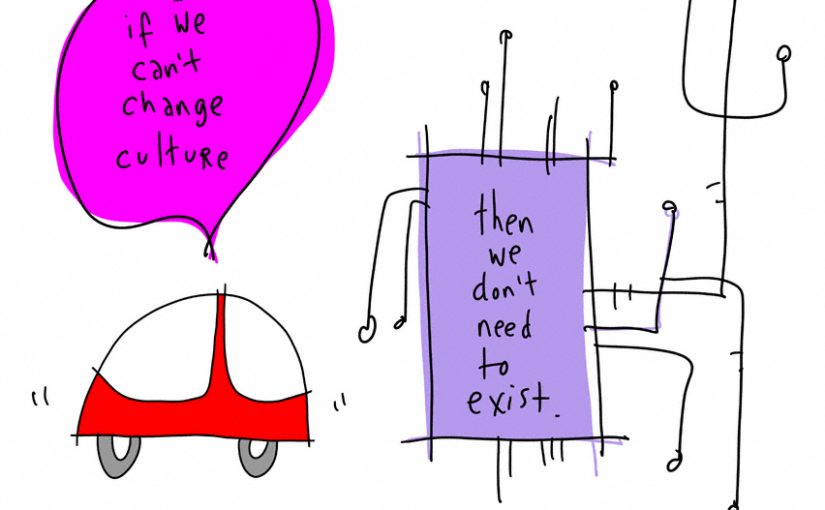
Then I discovered a recent cartoon in my inbox by Hugh Macleod of Gapingvoid fame. This cartoon says it all.

An organization that cannot change its culture (due to too rigid systems, due to lack of management capability, due to its people) has become trapped in time. While some organizations may exist like this due to sheer momentum, due to protection (by law), by continuous funding, or for whatever reason, will struggle to adapt to external change. These organizations are not resilient and they are at the mercy of external supporters (a.k.a clients, benefactors, funders or shareholders).

I was also asked how some organizations can still innovative despite a poor innovation culture. Again, it is of course possible to replace a machine, or for a few people in an organization to design something brilliant, or for a new process to emerge. Of course it is possible. But it takes much more energy, determination of a few, and some really tenacity to be innovative in an un-innovative (what is the right word here?) culture.

I am sure more comments will come.

Cheers, Shawn

I appreciated the comments received by e-mail, but wonder why people are not posting comments to this article? Is the WordPress registration process to difficult? Please let me know. And keep those comments coming!

Innovation as cultural as opposed to innovation as a technique or function

Originally published in August 2015, revised in January 2018

Reflecting on the correspondence I have received after my previous post and recent training sessions with manufacturers, I have come to realise that people are looking for tools and tricks to encourage innovation in their workplaces. Sometimes it is actually not even about innovation, but about making up for poor past decisions, such as not investing in technology or market development when they should have. Others think of innovation as a function or as a management tool that can be standardised into a job description or an area of responsibility. While this is possible in some contexts, I don’t find this approach to innovation of much use in the smaller and medium-sized manufacturing firms and the research/technology institution space in which I am working.

For me, innovation is firstly a value, a perspective of how organisations should be. When management says, “We are an innovative organisation “or” We want an innovative culture “or” Our reputation is that we are innovative”, then we can move to tools, portfolios, tricks and tweaks (those things that people in innovation functions must attend to). Many textbooks, articles and blog sites on innovation and technology management are then useful. Actually the challenge is to decide which of the bucket loads of advice to use, and consultants such as I typically help organisations to choose a few tools and provide guidance on how to use them fully and consistently. I would dare to say that it is relatively easy to help companies that are already innovative to become more innovative.


What really intrigues me is those organisations that do not think of themselves as being innovative, or that are from industries considered to be traditional and not innovative. Perhaps they used to be innovative, or perhaps they are innovative in some areas but not in others. Perhaps they had one or two tricks in the past that have now become irrelevant. These could be extremely competent organisations, such as a university department, a manufacturer of highly specialised industrial equipment or an organisation that simply designs and manufacturers exactly what its customers order. Even if the outputs of these organisations can be described as ‘innovative’, they do not necessarily have innovative cultures that are constantly creating novel ideas, processes and markets. In my experience these organisations have brilliant technical people, but management is often not able to harness the genius, experience or creativity of its people. The main reason for this is not a lack of technique, tools or tricks, but the lack of an innovative culture, leading to a lack of innovative purpose.

These organisations are trapped. They are equipped for the past, and they are paralysed by all the choices they have to make for the future. For management, it feels as though everything it has in place is inadequate and needs equal attention, ranging from attracting staff with better or different qualifications to finding new markets, developing new technological capability, sorting out cash flow and capital expenditure, and addressing succession planning.

Improving the innovation culture of an organisation is a complex issue. It is not about tasks, functions or tools, but about changing relations between people within and beyond the boundaries of the organisation. Innovation in these organisations is a sideshow, a project, whereas it really needs to be central to the business strategy, a different way of looking at the world.

When working with organisations that must improve their innovative culture, interventions like motivational speeches and optimistic visions of the future are not useful and could in fact deepen the crises facing management. Nurturing a culture of innovation goes far beyond establishing or refining innovation management functions. It is a strategic issue that is initiated by top management, but that will soon spill over into every area of the organisation, hence it cannot be driven by a management function called ‘innovation’.

Improving the innovation culture process starts with connecting management back with its people. It starts in the present, the now, not with future scenarios, not with using innovation techniques and better analytical tools, and in most cases not with some or other management fad. It goes beyond trying to improve products, processes or business areas, beyond gaps in management’s capability. It must look at the relations between people, between what people know and can do now (or knew and could do in the recent past), and the potential people see to make small improvements. It is essentially about many dialogues happening throughout and even beyond the organisation. After cultivating dialogue, management needs to empower the organisation’s people to allocate resources to activities that strengthen the learning culture, that turn even small improvement projects into processes that broaden thinking, deepen learning and motivate people to think beyond just their specific tasks.

When management has the courage to decide to improve its culture of innovation it starts a process that cannot be described as incremental improvement, as that sounds too directed. It is rather like a deepening, or an awakening, where employees are inspired to contribute, and management is more aware of what it can do to enable its employees to become more innovative on all fronts. Of course, management faces the risk that outdated management approaches that do not seek to empower employees to be creative will be exposed, and some tough decisions will have to be made.

To nurture an innovative culture requires innovation in itself. It requires management at different levels to rethink its roles from being directive to being enabling, from being top down to being more engaged with its teams.

Instigating innovation: Where to start

Originally published in 2015, revised in February 2018

I am currently focused on strengthening the manufacturing sector. I am speaking more and more at meetings and events, in boardrooms and to post-graduate students about innovation. In this increasingly engineering-minded world people frequently ask me for tips on how to get innovation going.

Some of the ideas people put forward are:

“How about an idea box?”
“How about canvassing ideas for a new product design from our customers?”
“How about rewarding our engineers with a profit share if they design a new product?”

However, the truth is that many manufacturing enterprises, especially the smaller ones, are too narrowly sliced into specific functions. They are mimicking large organisations and by doing so are giving up any flexibility and resilience that they might have had. Designers design, manufacturers manufacture and salesmen sell. This functional division of their hierarchy makes information flows about potential improvements, new market opportunities and some old tricks that could become useful again very difficult. The cost of coordination in these enterprises is very high. In these silo-based organisations the cost of finding information, new signals and new ideas from outside the organisations is extremely high, and in general they struggle to learn. Why I mention them is that innovation is something that most organisations are already doing, they just do not recognise it as such. Innovation is lost within functions, or is overlooked because a project is focusing on addressing some or other need. Every improvement project could also be used to change or improve the culture of innovation, to deepen the use of knowledge and to increase capabilities and options for an uncertain future.

A second problem is that most smaller manufacturers are mainly focused on product innovation. Which does not mean being focused on knocking the socks off their customers with frequent improvements or brilliant designs. Unfortunately, many of the more traditional manufacturers are focused on how to reduce the price or how to sort out quality issues. This is actually a kind of process improvement, but a very narrow one. The limitation of this incremental approach is that you can at best only grow and develop as fast as your customers can articulate what they want. Competitors or substitutes can also upset market relations by coming up with novel solutions that an incremental approach struggles to generate.

A third problem is that innovation is only carried out when customers demand it. It is passive. It functions in bursts to get things right, and then it settles into a problem-solving mode until the next customer makes some unreasonable demands. One should be grateful when clients give you a piece of their mind, but this is still far too passive to my way of thinking.

What many manufacturers lack, especially those in the more traditional sectors such as metals and engineering, is a focused effort by top management to build a culture of innovation that is actively trying to find product, process and business model improvements. The effort must be focused internally in order to constantly rethink the business and its core processes, and at the same time it must be focused externally on what customers and competitors are doing. The really good companies are also looking beyond current markets and competitors at new technologies and how they might shape the future.

Thus far I have addressed the business perspective. However, research organisations, technology transfer centres and industry support centres can also become trapped in a low-innovation culture.

I am currently working with a few industry groups and research and technology centres to find out how these organisations can move beyond the “catching up” and responding to change modes towards anticipating what will come next. This sounds perfectly simple, but by merely mobilising more and more people in the organization to search for what’s next has already yielded amazing results in a short time. Perhaps I am being over-optimistic, but I can already sense the innovation culture change in these organisations as more and more people become involved in searching for possibilities.

Here’s an apt quote attributed to William Gibson: “The future is already here – it’s just not evenly distributed”.

The first kind of search is to get more people involved in searching for what is already present within the organisation, but is not recognised or is not being used to transform the organisation. The second kind of search is to go beyond the organisation in related and unrelated markets and technologies. Take trends such as the global shift to automation, or the new developments in artificial intelligence and play with these within your organisation. Wonder out loud with your people about what this might mean for the organisation, for clients, for suppliers. How might these technologies or trends influence their investment decisions, their viability or their business models? Use these vague concepts to rethink the organisation, its networks, its technologies and systems.

That is what I call instigating innovation, when the dialogue led by the leadership mobilises more and more people within and outside the organisations to start thinking creatively, connectedly and in new ways about the future and the present. Lay a strong foundation for innovation by getting more people to think, imagine, connect ideas and improve.

New series: Instigating Innovation

I have been developing a new capacity building method and training approach that brings together my work in innovation systems promotion  and my work on improving technology and innovation management. I call it “Instigating Innovation”.

I chose “instigating” because it has a more positive ring to it than provocation or incitement. While it is a noun with mainly a positive tone, it is a bit more aggressive than support, enable or encourage or even stimulating. I have been referred to in my past as an instigator of change so I thought this was a good idea.

Why was this effort firstly necessary and secondary so rewarding?

My work on innovation systems is mainly aimed at assisting meso-organizations such as technology transfer centres, research centres and universities to be more responsive to the needs of the private sector. While it only takes a few interviews by a senior decision maker from one of these institutions to a few leading enterprises to get the organization to improve its offering to the private sector, it does not solve the problem that these institutions often needs a continuous process of innovation itself. So while they can respond to the needs of the enterprises (for instance by launching a new service, or making a key technology available, etc), they often are not able to innovate constantly in order to anticipate what they private sector might need in the future.

With my other hat on, working in the private sector to improve the management of technology and innovation is focused on helping individual and on rare occasions, groups or networks of enterprises to formalize or improve their management of innovation. Here my challenge is that most enterprises innovate by accident, or have elements of an innovation management approach in place without knowing it. But it is not systematic nor is it consistent.

So both supporting institutions and enterprises lack some very basic frameworks to focus their existing development and learning processes to ensure not only short term results (new products & services, process improvements, cost reduction, etc) but to also ensure longer term success (playing in the right markets, selecting the right technologies, investing in the right kind of knowledge, partnering with the right people, etc). Furthermore, most enterprises and supporting institutions have something else in common: they often face resource constraints with the most versatile of their staff being involved in problem solving and not thinking about the future and what may be possible sometime down the line.

I set aside most of March and had great fun reading through my collection of articles, books, reports of past missions, and speaking to entrepreneurs and development practitioners I trust. Based on this investigation I decided on the following criteria for instruments to include in the Instigating Innovation module:

  1. Each instrument or concept must be relevant to both enterprises and meso-level organizations05 building innovative capacity small
  2. Each instrument must provide a very simple framework that can be illustrated on a flipchart
  3. The simple framework must be usable as a workshop format that allows people to reorganize or explore their current and future practices
  4. The frameworks must be scalable, both in depth (allowing pointers for a deep dive into an issue) and in width (useable for a product, issue, portfolio or the strategy of the organization as a whole).
  5. Lastly, I did not want to be the consultant with a project, I want to be the facilitator that enables change and that builds long term sustainability into the organizations that I work with.

This was a very rewarding exercise. Not only do I love reading about innovation, change and technology, I love finding better ways to explain these concepts. It was also great to find a way to connect my work on innovation systems, which often seems abstract, with the tough decisions that the enterprises that I work with must confront and address. I tend to work in the more technical domains dominated by academics, engineers, scientists and manufacturers, so finding a simple yet convincing way to add value to what these clever people do was important.

I will in the next few posts reveal a little bit more of the tools I selected and how it can be used.

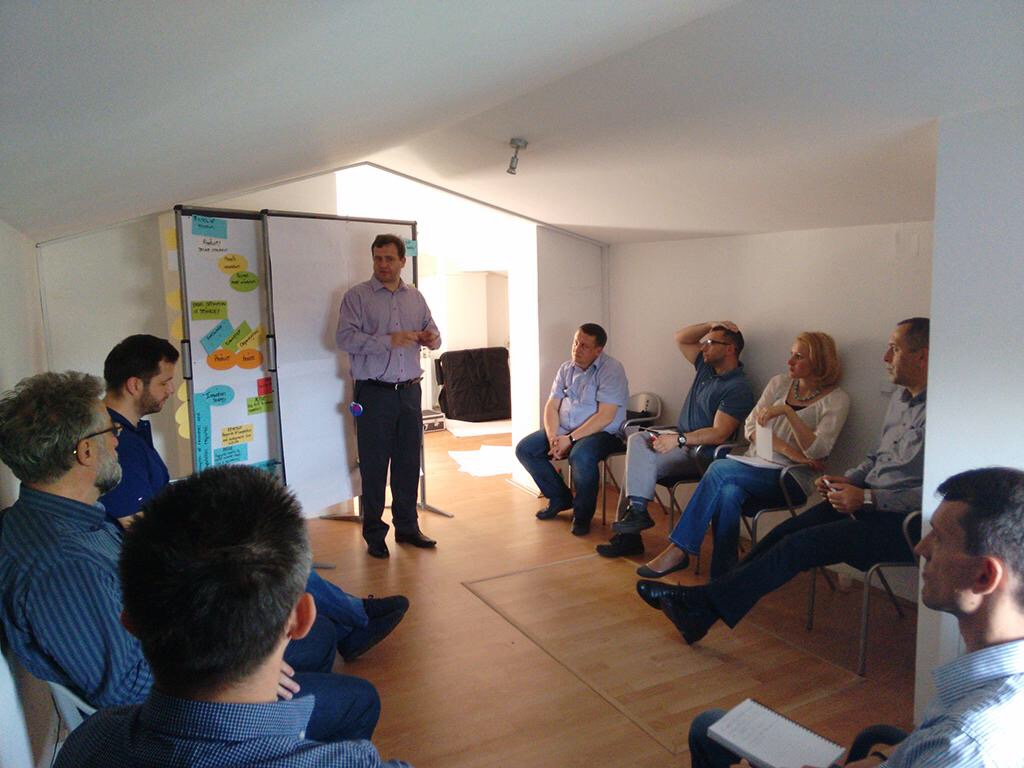
Thank you for the EDA team in Bosnia and Herzegovina who motivated me to turn this idea into a capacity building format and who agreed that I try “Instigating Innovation” on their team during my visit to Banja Luka in May 2015!

Instigating Innovation in Banja Luka with the team from EDA

Building institutions that supports knowledge flows to industry

It sounds like a cliche to state that manufacturing has changed a lot in the last 30 years. Yet people often say this without thinking of how it has changed. It is not just about the size of our manufacturers, or the increased competition from Asia or elsewhere. It is also not about the sophisticated equipment and the tremendous range of products that are now available to consumers. An important aspect of manufacturing change is the dependence on knowledge from internal and external experts, or Knowledge Intensive Business Services (KIBS). These knowledge experts include engineers, product developers, process experts, industry experts or logistical experts. While in a country like Germany, there are many public, academic and private specialists to go around and assist manufacturers to tweak their processes or solve specific problems, in developing countries we have a bigger challenge. Knowledge intensive services are prone to several market failures, and therefore it is important that we consider the role, importance and challenges that these knowledge services have.

Let me just state upfront that despite my PhD research focusing on the importance of knowledge services in the manufacturing sector, I am hesitant to treat the “knowledge economy” as something separate as it is often done in the South. The increasing importance of many different kinds of knowledge throughout the economy is pervasive. Just ask a commercial farmer in Africa how they have had to change their farming practices in the last 3 decades. It is almost unthinkable that 30 years ago a person could start commercial farming without a tertiary education or at least one highly experienced supervisor. The same goes for manufacturing.

There is a big difference between generic Business Development Services (BDS) and Knowledge Intensive Services. While with BDS our problem is to get good all-rounders to provide services to enterprises where it is very hard to determine the real value of the service offering, in Knowledge Intensive Services the service is very specific to a certain (technical) problem, it is deep knowledge and the value (and cost) is usually very clear. Firms that know what they are doing need knowledge intensive service providers to fill in the gaps where deep knowledge is needed, a BDS provider is typically out of their depth with a manufacturing enterprise that are trying to be competitive.

  • The first challenge we have with intensive or specific knowledge is scale. When just a few manufacturers use more advanced equipment in a country there is a good chance that few service providers, experts or technicians will be available. In market failure terms, this is called an indivisibility (you cant divide the cost of the expert easily between different enterprises, or just take a small piece of the expert). It could also be about scale (not enough business to justify the emergence of a specialized service provider). It is often difficult for manufacturers to coordinate their use of expert service providers, or to coordinate the procurement of similar equipment that makes the development of a pool of service providers possible. This is called a coordination failure and it is pervasive in our developing economies.
  • A second challenge is that many manufacturers are hesitant to search outside their firm. This is often due to costs (which includes the time spent to find the right expert), but also because for so long manufacturers had everything they needed in-house. In South Africa, many of our older firms are hesitant to use “consultants” because they don’t trust them. This could be described as a market failure around asymmetrical information or adverse selection.

One way to increase the availability of knowledge intensive service provision in a developing country is through the connection between academic institutions, public funded industry support programmes and industries themselves. This requires that technical or knowledge experts are able to be released from certain teaching or research duties to work with firms. This is often very difficult due to the high student load in many of our African universities. I am often astounded by the world class research capacity and expertise that are hidden inside universities that are desperately needed in industry. This failure has many names, but in market failure terms it is called a public goods failure, in other words, public funds are not used to overcome persistent market failures in industry.

A second and parallel strategy should be to make sure that the Meso level organizations (which include universities and higher education institutions) are concentrating on overcoming the market failures in industries and in firms. In developing countries these Meso organizations, meant to address specific performance issues at firm or industry level, are more focused on securing and spending national (or international) funding than to become valuable and responsive to the needs of industry. To get the Meso organizations focused on the plight of firms requires an industrial and modernization policy that is focused on building the right economic and industry supporting institutions – this cannot be done just by merely implementing projects or programmes – it must be systemic. With right I mean relevant and equipped with high level experts that understand and can relate to the issues in industry.

This phenomena of the disconnect between public knowledge services and the need of industry is more widespread than you would think in our developing countries. It is a public good failure that undermines the well being of our economies. I believe this is also an ideological failure, because governments tries to use their funds to provide incentives or prioritize certain kinds of behavior both in the public sector and in the private sector. Instead of responding to what is emerging or what is needed in the private sector, the public sector tries to prioritize what it believes to be ideal. The result is that the firms that are most able to create jobs and wealth are left without public support.

In Mesopartner we will be working on consolidating our experience in bottom up industrial policy. We will work closely with research organizations and development partners around the world to strengthen and develop a body of knowledge on how some of these issues can be addressed in the developing world. We do this by developing a theme where instruments, concepts, theories and practice can be integrated. If you are interested in participating in this process, or have experience to share, please give us a shout.

I have previously written about this some years ago in the post about the service sector  and about the increased importance of knowledge intensity here.

Moving from generic to specific and then onto systemic

When working with development organizations in the mesolevel we often find that their programmes are very generic. The same can be said of the findings of many diagnosis. The result is that firms do not really use the services of these organizations, because the value add and the impact of the services are not really clear.

For me there should always be a movement from the generic (e.g. the foundry sector is not competitive) towards the specific (e.g. the foundry industry is not competitive because it lacks capacity to do good front end engineering and design). After we have developed a sense of some specific issues that are affecting the performance of firms, there are two things we have to do.

Firstly, we want to try and figure out if there is something that we can do at a more systemic level to try and influence the specific issues. With systemic I mean that instead of addressing a particular issue repeatedly at various firms, see if there are other ways to achieve the same outcome. An example would be instead of only offering a design service to firms, make sure that the university curricula includes sufficient content dealing with design. Of course, we should always strive to have multiple interventions to address a particular issue.

Secondly, we should verify whether our specific findings are unique to the firms we have diagnosed or engaged with. For instance, and food initiative run by a university might find that the private sector is affected by a lack of a particular kind of testing lab. Then instead of designing a solution just for a limited number of producers, the university should check whether similar firms in other industries (related and not even related) are facing the same constraints. It may just be possible to design a solution that is useful to a much broader target group, making the solution more sustainable and more relevant to the private sector.

From my experience of working within many different value chains is that there are many issues that are treated as being unique (or specific) to a particular value chain that are in fact affecting many different kinds of enterprises. The South African Industrial Policy framework for instance is designed around many different sub-sectors, with many different interventions implemented by different organizations and programmes that are actually not unique to a particular sub-sector. This is expensive and also not really systemic, these interventions are not permanently changing the meso level in South Africa or the service offerings of meso organizations such as universities and other development programmes. The South African manufacturing sector is struggling with low volume, outdated designs and rapidly increasing costs across the board. I imagine that it should be possible to based on the insights from the different sub sectors to design much better programmes that are cross cutting over many different sub sectors, and that from the start are designed to improve the service offerings from meso organizations to firms.

Book announcement: Reducing Red Tape

This book is a collaboration between Mattia Wegmann and myself, and is based on our practical experiences gained in assisting local stakeholders to identify and address Red Tape. It consolidates our work on Reducing Red Tape in the context of Local Economic Development. The book is available as a printable e-book for free, or you can order it in a A4 Paperback format (printing and shipping costs apply) from the Mesopartner Bookstore.

The official description of the book is:

Increasingly governments and international organizations are attempting to reduce bureaucracy and red tape. While many of these reforms are aimed at national laws and reducing the costs of compliance, not much guidance is available on how local stakeholders can identify and attempt to streamline red tape at a local level.

In this publication, Shawn Cunningham and Mattia Wegmann share their practical experience in reducing red tape at a local level. The manual is aimed at local economic development facilitators that are working on improving the cooperation between public and private stakeholders.