Where does innovation come from? – part 1

I have been asked to share some of my work on innovation. Below is a short piece from a publication that I am working on dealing with innovation systems.

While product and process innovation is better known and often receives the most attention, competitive advantage often emanates from organisational and business model innovations that emerge within societies. Innovation is a powerful explanatory factor behind differences in performance between firms, regions and countries.

According to Fagerberg et al. (2005:4-5), invention is the first occurrence of an idea for a new product or process, while innovation is the first attempt to carry it out in practice. Thus invention and innovation could be closely linked, although in most cases it is separated in time (sometimes decades or centuries), place and organisation. However, the fact that innovation typically emerge within a complex system is often overlooked. For instance, Schumpeter explained that the innovator that invented the steam locomotive still had to wait for others to develop the different aspects of the rail system before the locomotive could be commercially viable. The steam engine was initially invented in a completely different context, again illustrating how inventions are dependent on the context in which it arises.

While many innovations can be linked to well-funded research programmes, this is not always the case. Firms usually innovate because they believe there is a commercial benefit to the effort and costs involved, and this process typically starts by reviewing and re-combining existing production factors (Schumpeter, 1964/1911). Sometimes increased competition, changes in market structure or market demand, or changes in technological performance also affect the innovation process. To turn an invention into an innovation, a firm typically needs to combine several different types of knowledge, capabilities, skills and resources from within the organisation and the external environment. The role of this knowledge and learning interaction will be described in the next sub-chapter. The willingness or interest of an individual in tinkering and exploring better solutions is influenced in part by the organizational context of the innovator, but is also influenced by factors such as education or qualifications, meta-level factors such as culture, personal characteristics (such as patience, inquisitiveness or tolerance of failure) and the institutional environment. Other factors, such as competitive pressure, problem pressure, or social and economic incentives also play a role.

Frequently, policy makers, universities and technological supporting institutions erroneously describe innovation in a linear model that assumes that innovation is applied science. It is assumed to be “linear[1]” because it is believed that there are a series of well-defined stages that innovations go through from research (science), followed by development and finally production and marketing. In this linear model scientific research is deemed to be the most important step as it is the first step in the process. Although there are some cases that followed this path, these are the minority. Very often this line of reasoning is brought by people wanting to justify larger research budgets.

Notes

[1] The “linear” innovation process was first criticized by (Kline & Rosenburg, 1986)

Sources

FAGERBERG, J., MOWERY, D.C. & NELSON, R.R. 2005.  The Oxford handbook of innovation. Oxford ; New York: Oxford University Press.

KLINE, S. & ROSENBURG, N. 1986.  An overview of innovation. In The positive sum strategy: harnessing technology for economic growth. Landau, R. & Rosenburg, N. (Eds.), Washington, DC: National Academies Press, pp. 275-305.

SCHUMPETER, J. 1964/1911.  Theorie der wirtschaftlichen Entwicklung. Eine Untersuchung über Unternehmergewinn, Kapital, Kredit, Zins und den Konjunkturzyklus. Berlin: Duncker und Humblot.

Stimulating the formation of manufacturing business in South Africa

My international readers must please forgive my focus on my beloved home country in this post. But this is a topic that is close to my heart that we have to resolve in South Africa to secure the wealth and prosperity that our nation so desire. But perhaps you have faced the same challenges wherever you work.

I receive many requests to assist with the ‘creation of industrial businesses’ in South Africa. As this is a topic that is close to my heart I usually respond very enthusiastically to these requests. But in the last year or two the reality of the difficulty of establishing these kinds of businesses have dawned on me. Let me take you through my thinking.

Lets look at what it takes to start a manufacturing business. Firstly, you need an entrepreneur. This person must take the lead and mobilize and marshal the right resources, people and processes to take advantage of some opportunity. I think you would all agree with this statement. But if you unpack this sentence then you find three potential bottlenecks:

a)      you need an entrepreneur;

b)      this person must take the lead and mobilize the right resources, people and processes

c)       you need an viable opportunity

Point a) is a challenge. To start a manufacturing business the entrepreneur stands a far better change if the individual has technical or scientific competency or experience in the industry. With the current incentive environment many black or female candidates with the required competencies are better of in the corporate world, where large salaries and other perks are available. With the shortage of experienced or highly qualified advisors, most white candidates that meet this requirement have incentives to rather provide consulting services to government or large business. Many development programmes try to work around this problem by taking young inexperienced people, or even worse, vulnerable unemployed people, and try to establish them as entrepreneurs despite the fact that they would prefer employment rather than being a business person. I can go on for pages about this issue, but let me stop here.

Point b) is a second challenge. The role of an entrepreneurs goes beyond having a bold vision or being able to spot a great opportunity. The entrepreneur must mobilize resources and recruit sufficiently experienced or qualified people to work towards exploiting the opportunity. It doesn’t end here, as the most important role of the entrepreneur is to use their leadership skills to organize their mobilized resources and people into business and manufacturing processes. The latter is really difficult if the entrepreneur does not have management or manufacturing experience. Of course, we can all think of examples of individuals who have built viable businesses without management or technical skills. These cases are rare for many reasons, and it often depends on the character of the individual and the tolerance of their customers to pay for the steep learning curve that small under-resourced or under-managed enterprises have to go through. Say for instance, an entrepreneur can secure enough capital to start a manufacturing business, but they do not have any manufacturing experience. Unless they are able to recruit and trust a suitable qualified and experienced person that can take the responsibility on the technical side of the business, their investment is doomed. The inverse is also true. When a person that is technically competent starts a business, they might have trouble with the management of the administration and business processes of the enterprise unless they are able to recruit staff with sufficient experience to reduce the risks on that side of the business.

The third point is around the opportunity, and the ability of small enterprises to pursue them. One of the huge business process innovations of the last decades is the emergence of franchises. In a franchise, a proven and tested business system is replicated throughout a market. Think of a car-rental business. If you wanted to start a car rental business 15 years ago, you would need finance for several cars, staff at your outlet, technical staff, and cleaning staff. Now the likes of AVIS and others have mastered their business and technical systems to the point where a franchise in a small town can use tried and tested methods to run an office. The person managing the branch or franchise earns far less than you would be satisfied with, and plugs into a national (or even global) administrative system that manages salaries, vehicles, insurance and logistics. It would take a very brave business person to try and compete with such a hugely refined and efficient business system. And if you think of it carefully, then some of the basic rules of economies is that these kinds of system makes a society wealthier, as the productivity of each person working in that franchise branch is much higher than it would have been in your independent outfit. To compete against these business innovations (the innovation of a decentralized management and administrative system backup up by a highly efficient logistical system) you would need to have a highly differentiated business with many innovations. I am not saying it is impossible, I am simply saying it will not be easy.

OK, that is a service business example. For an entrepreneur to pursue the manufacturing of almost any product, they need suppliers, service providers, process information, marketing channels. The days where a single business making a completely integrated product are over, as these opportunities are often only profitable in a large scale. Manufacturing now takes place in ‘value networks’. So if I wanted to manufacture speakers, I have to establish myself within these networks. Despite the fact that almost an electronic student knows how to create a set of speakers, without knowledge of these networks and industrial systems it would be very difficult to establish a profitable and competitive speaker manufacturing business. So unless my product is completely unique or differentiated, I have to depend on existing systems to build my business.

Why are there so few serious entrepreneurs pursuing detergent mixing, or candle making or many of the other business formats that are often promoted by small enterprise promotion agencies? I think the main reason, is that the opportunity to build a business where a viable return on investment can be secured is limited. This means that vulnerable people are being helped to establish businesses where most sensible investors would not even venture into. If anyone can copy your business model even without acquiring the right skills or technical competencies, then how would you secure your investment?

We need to rephrase the objective of small enterprise development in South Africa. What we need to promote in South Africa is that experienced and technically competent people working in large corporates must have incentives to quit their secure jobs in order to pursue higher risk business opportunities. We need people with management skills, or with scarce technical skills, to start tinkering and designing new businesses, new products, new management systems in order to gain an advantage or an ability to secure a return on investment. Let these people create the jobs for the people that are lacking entrepreneurial skills or technical skills.

Let me know what you think!

Shifting towards innovation and technology application

Have you also noticed that increasingly local economic development is captured by the public sector, often from a governance perspective, while the role of the private sector and its own development gets reduced to a consultative stakeholder? I find this amusing, as the private sector is the acknowledged driver of growth and increased wealth. I have already shifted my attention to the stimulation of technology use and innovation in the private sector, as I cannot imagine a more strategic way to create a new future for our region.

But strangely, the private sector, at least at an organised level, has only in a few places in Southern Africa taken the lead in its own development. While the media and government complains about job losses, firm closures and the increased uncompetitive performance of the industries, industry itself seems to be waiting for government to bail them out!

At the moment I see only a few ways out of the hole that our industries are in. Firstly a more pro-active approach towards the use of technology and innovation is required. Government is not going to donate the machines, and nobody will give a firm the research. Firms need to invest in new technology. Secondly, at a collective level, industry bodies need to move from advocacy towards a more proactive approach of building value chains and industrial networks. Many famous developmental fads like value chains, incubators, clusters etc have their origins in the private sector, even if these instruments are often widely used and abused by the public sector. Why are we seeing so little investment in these instruments by the private sector for the benefit of a specific industry? Thirdly, industry needs to realise that both increased competition and increased globalisation have changed the rules. Just as governments have to deal with immigration and passport issues, business should become a bit more obsessed with shaping the economic, education and science policies of their countries.  If industry does not as a collective become more vocal about education standards, research missions or industrial support then we are in for a tough 20 years!!

Hey, what do you think we can do to inspire our industries in Southern Africa to become better organised and more involved?

How can we get businesses to start investing in the latest technology?

How do we get business to not only innovate in marketing and advertising (we are good at that) but also to invent new business models, new technologies and new solutions to the problems of the world?

Any ideas or proposals are welcome!!

Innovative firms

Have you ever wondered why not all firms are innovative? If you are a development practitioner like I am, then you must have come across hundreds if not thousands of small and large firms that are not very innovative. This results in these firms also not being very competitive.

There could be many reasons why so many firms are not innovating, and one of these is that the firms are serving undemanding customers. This very often happens in rural or isolated areas, of where companies provide convenient goods and services.  Another reason why firms do not innovate is that innovation requires change, and this change is uncertain. This makes innovation not only risky, but also potentially expensive.

One of the reasons why development practitioners should try to stimulate the competitiveness of firms that they work with, is that increased competitiveness requires innovation. Again, this does not simply imply new products or processes are developed or improved, but also that firms try new management innovations. However, many development practitioners are not comfortable with competition, or do not understand the importance of competition to the socio-economic development of a society. There is a tendency in the field to try and get groups of individuals or firms to compete together against a competitor ‘out there’. This is a first step in the right direction, but we must also try to get our local firms to compete against each other. Thus we must try to create opportunities to collaborate, but at the same time we must try and increase or stimulate the local competition against each other. With this I am implying the nice and healthy kind of competition.

What is often forgotten in economic development, is that we are not only concerned with the health and the well-being of the business owners. Firms must also innovate to create better, healthier and more stimulating jobs, attract foreign investment, skills and knowledge into our areas, and finally, provide improved goods and services to local communities. The latter is usually overlooked. Thus, we want firms to be competing with each other, and together also competing with others, not only to make business owners and managers rich, but to ensure that our society in itself becomes wealthier and more innovative. This will then lead to more innovative and competitive businesses, and so the virtuous cycle is complete.

In search of innovation in firms

Thank you for your concerned messages about my recent whereabouts.

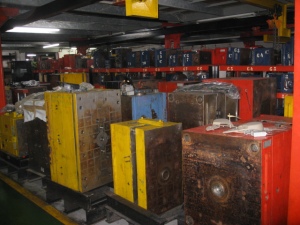
In the last few weeks I have involved in running a RALIS (Rapid Appraisal of Local Innovation Systems) with my colleague and friend John Lawson. This process is focused around three Institutes of Advanced Tooling in South Africa that are based in the Western Cape, Eastern Cape and Gauteng. We are looking at the innovation system around the tooling sector around these 3 centres and their key customers.

A literature search on innovation reveals that product, process and organisational innovation (a.k.a business model innovation) is commonly identified in the academic literature. Innovation does not take place in a vacuum, and a RALIS methodology allows us to better understand the determinants of innovative behaviour by firms. It is important to recognise that while tinkering about in a workshop is great fun, a lot of innovation in firms and between firms cost a lot of money and time, and the outcomes are uncertain. Therefore, we have to understand how and why firms innovate, and how the Institutes of Advanced Tooling can play a role to support innovative behaviour by firms in the South African Tooling sector.

Now many of you will know that my interest in the tooling sector goes back a long time. Firstly, the tooling sector is truly an important sector, as toolmakers make the machine tools and production equipment that is used by the manufacturing sector to produce just about everything that you see around you. Secondly, the tooling sector was one of the two sectors that I used to analyse market failures in a knowledge intensive business service market in for my PhD Thesis.

In the next few posts I will share some of the insights from this exciting process with you!

A tool used to make picture frames
Tools and moulds
Tools and moulds

Understanding technology for climate change better

I received a book on climate change last year for my birthday called Ten Technologies to Save the Planet. It was a bit odd to receive this gift, as I don’t consider myself to be a tree-hugger. But my friend explained that this book will change my life and answer the many questions that I’ve been asking about how developing countries can engage in climate technology.

Chris Goodall, is a businessman and author of several books on climate change, including Ten technologies to save the planet. Ten Technologies To Save the PlanetThe book is divided into ten chapters, with each chapter focusing on a range of different technologies that are either developed or being developed to address a specific issue. For instance, there is a chapter on wind power that explains the existing technologies available today to utilise the energy created by the wind. There is also a chapter on alternative fuels that also explain and compare the different feedstock that are available for the production of biofuels.

Unfortunately the book does not deal with issues pertaining to economic development. For instance, I wonder how the global environmental and climate technology revolution that is driven by pro-environmental policies in Europe is going to put European and US manufacturers into the next “industrial revolution” while Africa is still a revolution or two behind?  I also wonder how the new climate market systems where companies can trade carbon credits can be used to get developing regions into the global market system. For instance, we have a lot of sunshine and a shortage of electricity generation capacity in South Africa. How can we solve this problem using some of the carbon credits or off-sets of European firms?

But this book is a must-read for development practitioners that are constantly confronted by dreamers who want to become rich or develop industry through investments into “amazing bio-fuel products”. It is now on the top 10 of my favourite books ever. I cannot wait to assess the next value chain for opportunities to reduce energy consumption or to identify opportunities for manufacturing firms to become competitive through better climate technology applications.

Read more about the book on Wikipedia, or visit the Carbon Commentry website where more information on Chris Goodall and issues around Carbon can be found.

I have uploaded all three the books by Chris Goodall onto the mesopartner store at Amazon.

Climate technology for competitiveness

Following the calls and e-mails I received based on the previous post, I thought it might be a good idea to expand on the idea of how climate technology could be used to increase the competitiveness of industry and of certain locales. By the way, you are welcome to share your ideas by commenting and uploading pictures on the blog directly!

What do I mean with “climate technology”? Climate technology refer to the many technologies that are now being developed out there, with well-known examples of solar geysers, solar panels and windfarms. But there are many other technologies that are being developed that range from insulations for homes and offices, to home electricity and heat generation. If you dig deeper, then you find that many industries are now becoming aware that they are using electricity to generate heat, and then using electricity to cool things down again (Have they never heard of heat conversion?). So people are generally becoming aware that if they can use less energy to produce a product, that they will ultimately be saving costs and saving the planet.

There are many forces for change other than the riots, protests and bickering at international conferences about the climate. Last week the first supermarket chain in South Africa was certified as emission free, with several large retailers like  Massmart, Woolworths and Marks and Spencer in the process of assessing their emission footprint. These retail chains are now starting to assess how their COMPLETE supply chains are dealing with the environment.They are not only looking at their consumer goods, but also at their total operation. This is just one way that value chain promotion and climate technology is related.

What do I mean with climate technology as a means to increase the competitiveness of industries? Let me first create a picture of the South African manufacturing environment. In general, our manufacturers are losing out to more productive and lower cost Asian producers. But the South African manufacturing industry is still world class in many fields and in many advanced production methods, especially in shorter niche production runs. Furthermore, despite the brain drain that has affected the economy, South Africa still has a rich expert base in diverse technological fields ranging from electronics, metals, to chemicals and all the way to nuclear research. Compared to many other developing countries there is a rich institutional layer (ranging from research institutes to specialised tertiary institutions) that is supporting the private sector.

I believe that we should be actively mobilising the South African manufacturing sector into climate technology, as the international pressure on industries, government and consumers will only increase in the future. Many of these different users of technology are going to start making decisions not only the utility of the product that they are purchasing, but they will increasingly assess the environmental footprint of the product. Furthermore, industries that adopt climate friendly technology are reducing costs in new ways, increasing their cost and brand competitiveness.

Locales or places that start to promote climate technology might be able to get a headstart on other regions, and there are many places where the scale of environmental or climate pollution could actually be used to start completely new climate technology research and development capacity. I can think of the very sensitive waterlands in the Chrissiesmeer region in Mpumalanga province in South Africa that is under threat from coal mining as an example of an area that could provide a critical incentive for the development of a new industry of climate technology producers and service providers (see feature on the Carte Blanche investigative journalism programme).  The demand for this kind of technology is there, yet the environmental lobby is still trying in vain to fight industry.

But there are several obstacles, and the first is the limited economies of scale. If the cost of researching and developing new technology is set aside, then costs of finding potential customers (search costs)  or applications for new technology is high, and the scale of return is uncertain. Therefore investors are hesitant to enter many market segments. With Southern Africa’s tendency to perform well in small scale and specialised production the risk is lower, if only the producers could identify the right market opportunities. But government and development practitioners would have to play a critical role in supporting this new marketplace, and often public funds is needed to get this kind of initiative off the ground. The current policy obsession with benificiation and final product manufacturing is in my view misguided, and should focus on the strength of the South African industry to develop advanced niche technologies.

Secondly, I get the feeling that many people think that this interest in climate technology and the environment is a fad that will go away. Help, any ideas out there?

Lastly, as development practitioners we must get business, governments and households to understand that using new climate friendly technology save costs for the society on some new fronts. There is more to it than just saving the planet (although that is a good enough reason), it could also mean increasing the cost competitiveness of a company. It could mean smarter ways of doing thing, like finding ways to generate electricity and heat at a home or a business, instead of digging up roads and building coal fired power stations.

So when you conduct your next value chain assessment, ask yourself how the different links in the chain could benefit from technology that is climate friendly. Look at places where heat, steam, chemicals or other byprodycts are generated that may be of value to somebody else.