Change in societies – part 2

In my work with trying to get the private sector to perform better, I often deal with sectors and their support institutions. Very often there are official or recognised industry bodies that are promoting the interests of industry. The least these industry bodies do is to organise an annual golf day, with some even playing an important role to lobby with government. The more organised sector bodies play an active role in sharing information, promoting standards amongst their members, or in some cases actively trying to develop their members or new markets. So these industry bodies often try to affect change in the way I described in the previous post.

But although these organisations are functional units themselves, they are actors trying to promote change in a small part of a society. This means that while they can affect change internal to their organisation through formal change or organisation development methods (using hierarchies, sanctions, incentives and process management), they have to also play a leading role in changing the society around them. The members of the industry body, their supporters and the broader innovation system related to this industry body is not physically part of the organisation, but forms a sub-group of the society around the industry body.

Several challenges arise in this process of trying to get a part of a society to change. The first challenge is that this process of upgrading the performance of industry is often not recognised as a change process. Secondly, societal change is a tough thing to do, and the body of knowledge on how to achieve change in societies is still in infancy. Thirdly, to affect change in a society it is important to appeal to the common identity or value system of the group being targeted, and very often both these factor are weak within industries. For example, some pharmaceutical companies consider themselves to be in the cosmetic sector, while others in health. This means that even if we classify a firm in a given sector, they may still identify more with another sub-group in the society.

For instance, in my earlier post I mentioned the importance of leaders using value systems to lead through example. How can this be related to trying to change the performance or behaviour of an industry? The answer is that we have to make positive examples of those that are early adopters, or leaders. By showing how some firms innovative, or overcome problems through innovative thinking, creates opportunities for others to imitate. Furthermore, industry bodies cannot really use incentives or sanctions to inspire change. However, they can play an extremely important role of communicating why behavioural change or improvement is necessary. If industry bodies cannot build a better case for why firms need to pull up their socks, cooperate better, compete more, innovate or invest, then nobody else will be able to achieve this until it is too late.

Thus, industry bodies have a critical role to play in using their organised members to inspire behavioural change or performance improvement. This process must be understood as a change process at the level of the society. The desired change must be seen in a systemic way to make sure that individuals are not just thinking about measurable improvements (such as time to assemble a gadget) but to also consider the societal change aspects (how to recognise the new values or how to know whom to follow)

Change in societies

The previous post described a typology of competitiveness that spans three levels. In order for individuals, hierarchies (e.g. firms) to improve their competitiveness or performance some kind of change of performance is required. While some of these changes are incremental and takes little effort, it may in many cases require a more concentrated effort to make a significant change. A few years ago Holger Nauheimer introduced me to three different levels of change that corresponds with the typology of competitiveness.

Firstly, there is change in the performance or behaviour of individuals. This may be related to an effort to improve competitiveness, or it may simply be a change of behaviour. Secondly, there are change processes in organisations in order to improve performance and competitiveness. Lastly, there may be changes at the level of the society that results in improved performance and competitiveness.

In the first instance, individuals try to change their performance or behaviour through a combination of self-motivation, self-discipline, practice and concentration. Whether the change is success depends largely on the self-control of the individual, and their own incentives and value system. For organisation to change may require small incremental improvements. In most cases a change process requires proper management, transparrent leadership, transparency and clear communication with staff. Management may decide to use a structured approach, drawing on topics such as organisational development, change management and project management. A combination of sanctions and incentives may be used to shape the behaviour of people in the organisation.

At the highest level, changes occur in societies. These changes typically affect the performance of individuals and organisation, and are also affected by the performance of individuals and organisations in the society. For leaders to influence the transformation in societies, clear leadership with strongly communicated values are required. In my imagination I can think of leaders such as Nelson Mandela and Barack Obama at being particularly good at this. The challenge with change in societies is that it is difficult to manage, due to the fact that incentives and sanctions are weaker. There is also growing awareness of the psychology of crowds and how people in societies create and respond to signals of change. At the same time, we don’t have to think of whole societies changing. Malcolm Gladwell in “The tipping point” explains that when a small enough part of a society change, that it could lead to a tipping point where a larger scale change in behaviour takes place. This activism of change agents in societies are what seems to be keeping many societies in check at the moment, while at the same time promoting ongoing improvement and advancement.

From a systems perspective, the changes in individuals, organisations and societies should be recognised as complex human and social systems. There are many feedback loops, and delays between interventions and results. Furthermore, there are complex dynamics between different elements of the system. Therefore the results of decisions to change are often unpredictable, and care should be taken to create a habit of continous improvement combined with reflective exercises to make sure that the people in the system are able to respond to surprises and changes in the dynamics.

Interview with Natasha Walker on facilitation

On the right hand bar of this site you will find the link to a LEDCast episode that we have just published. In this episode I interview Natasha Walker on facilitation. Natasha is a real guru on facilitation and visualisation. We discuss the essence of facilitation, and share many tips, tricks and discuss some pet hates. The second part of this episode will be published in a few days time. I would love to hear from you!

Participants exploring a topic visually
Natasha in action
Natasha in action

In the shadow of value chains

Over the last few years value chains have become an important topic for donors and development practitioners. I say “again” because as with many other topics there is a tendency for these topics to be seasonal (read fashionable). This is great because every time it becomes fashionable new ideas are brought in, while old experiments provide valuable lessons and knowledge.

The purpose of this post is not to discuss value chain promotion. Just to make sure you understand what I am going on about, I will briefly define a value chain as the path of a product through a conversion process that starts with design (or raw materials), production, distribution and in some cases even consumption. An agricultural value chain will often start with seed, and will end up as a processed food product. On the mesopartner.com website there are several great publications and a LEDCast episodes on the topic of value chains.

In many of the areas where I am working there is a tendency by officials and development practitioners to take on the very tough commodity value chains. These value chains are typically in the traditional sectors and include end products like sugar, wood, furniture, fish, and many other agricultural products. These value chains are very

A huge pile of yellow wood and meranti, waiting to be burnt

attractive, as they typically reach into rural areas, involve a large number of people, create many jobs, and often involve small farmers and less educated workers. But these value chains are also the oldest, which means that the actors have had a lot of time to mobilise strong interest groups, entrenched positions, and comfortable way of doing things.

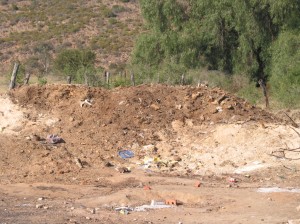
When you look around these traditional value chains, you often find dozens of smaller value chains that are overlooked. Hence the title, “in the shadow of value chains”. These chains include biomass (leaves, sawdust, feathers, etc), traditional medicine and exotic plants (in the case of forestry), wood offcuts (in the case of furniture).

A mountain of sawdust
A mountain of sawdust waiting to be blown away by the wind

In these secondary value chains are typically very small, and may appear insignificant at first glance. But closer scrutiny may reveal some interesting opportunities to start new firms, or to create skills upgrading opportunities for unemployed or unskilled workers. Extreme care must be taken to not raise false hope, or to push the vulnerable into businesses that they are not able to run competitively. It does not matter whether a trust, cooperative, project or society is used, as these are simply means to an end.

During the analysis these secondary value chains make an extra effort to see why entrepreneurs have not already pursued this idea or opportunity. Also try to determine what the minimum scale is that is required to pursue the opportunity commercially. The economies of scale typically pose a huge barrier to entry in rural or marginalised areas.

I believe that there are huge opportunities in the emerging sector of climate technology and environmental management. I recently saw a biomass to gas converter that can be installed in a community for only a few thousand US dollars. The converter is fed with biodegradable mass and then provides the community with gas for heating, lighting and cooking (another example here). There are many new technologies now entering the marketplace that can give rural areas a complete head start, with biodiesel being a obvious example. It would be great if we can find ways to link cleaner technology and climate technology with new innovative and competitive business processes within the context of value chain promotion!

Firstly, do you have any experience in working with these secondary value chains? Which products, technologies or end markets have you worked with?

Secondly, do you have pictures of obvious resources or business opportunities that are not exploited? I would like to build up a library of pictures of these products, so please post them to this blog so that we can get a movement going on these value chains.

Thirdly, have you investigated CDM and other climate technologies that have the potential to not only save the environment, but to improve the competitiveness of sectors and value chains?

If you are interested to read up a bit more on the green news in South Africa, then head over to Urban Sprout. They have a great website and lots of resources and links to keep you busy. If you are keen to get involved in investigating some of the value chains that are often overlooked, and that may offer interesting opportunities for exploiting by-products chains then share your ideas here!

The difference between facilitation and facipulation

Zini is sitting down while making an input

Whenever a facilitator stands in front of a group of people sitting in a workshop, it is important to realise that the standing position is a powerful and dominating position. While the purpose of a facilitator is to enable a discussion to take place, and certainly to challenge or stimulate thinking; facilitators often use their platform to share their ideas, thus influencing the group. I refer to this habit as ‘facipulation‘, which is a combination of facilitation and manupulation. Inputs made by the facilitator during a workshop could be extremely influential and manupalitive. While in some cases people will not mind being facipulated, in other cases people resent being told by an outsider what to do or how to think.

If it is necessary as a facilitator to make an input during a facilitated session, the facilitator should first ask for permission to switch roles. If the group permits, then the facilitator should take a seat (or take a less dominating position) and share their idea. This is done whilst complying with the rules that the group agreed to at the beginning of the facilitated session. Again, I emphasize, the facilitator must make the input as a normal group member. No special favors or rights for the facilitator like extra long time, or by critising other ideas. I prefer that the facilitator should sit down, as this breaks her power over the group. In fact, I take it so far that I ask a group member to faciliate or make notes on the flipchart in cases where I do not have a co-facilitator supporting me.

Remember, a good facilitator is like a mid-wife of the facilitated discussion concentrating on the process of discussion, while the RESULTS and the CREDIT belongs to the group