

Changing how a problem is framed can describe who can contribute and what success would look like

The way a problem is described often reveals what kind of expertise is required to solve it. It can also indicate whose issue it is and what resources are presumed to be needed. Experts might describe problems in ways that are hard for most people to understand, creating a sense of alienation or distance from issues that could be crucial for individuals to tackle. Many important problems, like climate change, water insecurity, or human trafficking, are presented in ways that disempower ordinary citizens.

Why is it important to frame or reframe a situation?

As process facilitators, we need to intervene and help interested or affected ecosystems or interest groups frame the problem in a way that enables them to take action, contribute what they can, and exercise their individual or collective agency in the situation. Otherwise, ecosystems and interested citizens are reduced to beneficiaries or mere spectators.

Donald Schön, a prominent thinker in process consulting, characterised framing as “the way practitioners define and interpret a situation, influencing their understanding of the problem, the relevant factors, and the potential solutions.”

Framing a problem is not only about making it more likely that novel solutions are generated because more people understand the problem. The process of reframing a problem also forces people to confront a problem and how it permeates or persists in their context or surroundings. It nurtures a deeper understanding of how an everyday problem affects others in our communities, and thus reframing enables collective action, joint learning and the strengthening of trust.

How we frame a problem significantly influences who can contribute to solving it and what success might entail.

Finally, when we can reframe a problem in a more open way, everyone who engages in understanding the problem or in contributing potential solutions becomes a co-innovator. Contributing to problem-solving builds confidence and gives hope, as it restores agency and builds social ties across social spheres.

What is wrong with how problems are usually framed?

Before discussing how to reframe a problem or a situation, I want to explain why the way we describe problems can sometimes be problematic.

  • A frequent challenge in problem framing is that descriptions are often too general. While individuals can identify symptoms, they frequently miss how the underlying causes or structural factors interact in a particular context. For example, although the effects of unemployment are straightforward to recognise, the underlying causes and potential solutions vary greatly depending on the situation.
  • Problem descriptions often implicitly favour a specific action or blame a particular actor. This is common when the problem is overly simplified or when the underlying causes are assumed to be more direct or straightforward than they are.
  • It can also serve as a method to transfer responsibility to another person.

How can we reframe a problem or a situation?

Now, let’s return to how we can alter the problem’s framing.

If urgent issues stay unresolved by stakeholders or earlier efforts haven’t yielded results, it could mean the problem isn’t effectively framed within the current context. The way the problem is presented might also be unappealing, discouraging individuals from engaging or contributing to a solution. It might also sound like someone else’s issue or a problem that demands specific expertise to fix.

Sometimes, we become so accustomed to problems that we see them as simply part of the environment we move through. We avoid confronting the issue and instead find workarounds that often come at a high cost or cause great inconvenience. The reality is that those with fewer alternatives tend to expend more effort and resources on workarounds, while those with more resources could perhaps switch to substitute solutions.

When people become familiar with long-standing problems, it may seem as if they need approval to challenge the status quo, because the common framings do not invite their input or interest. This is especially likely to happen when problems become the rallying cry of politicians who promise that they will get somebody to solve these problems on behalf of citizens.

What is framing?

Framing extends beyond simply rephrasing the problem. It involves dedicating time to thoroughly understand the problem space and the underlying structures that sustain patterns, even when they cause pain and inconvenience. Furthermore, framing is seldom a solo activity; it typically requires a group with varied experiences of the problem to collaborate, developing a shared understanding of the issue, its impacts, and frameworks.
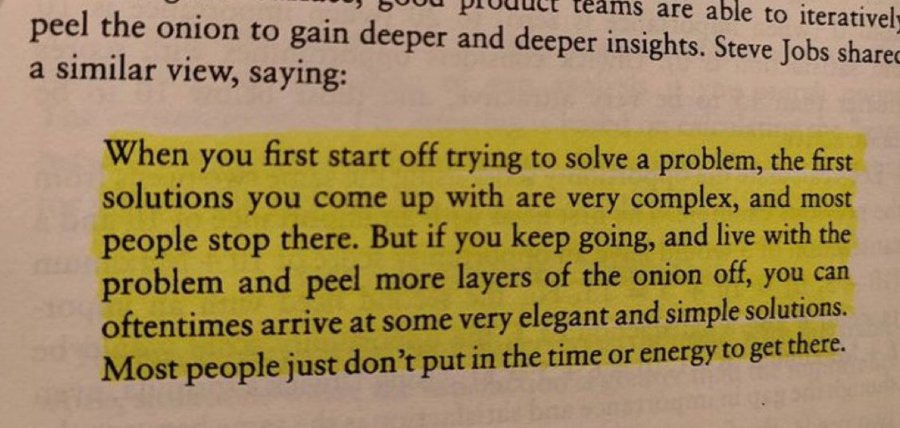
Steve Jobs quoted in Newsweek, 2006

Marvin Minsky, an early AI pioneer, emphasised that understanding involves viewing the problem from multiple perspectives, allowing different permutations or representations to be detailed as fully as possible. Essentially, this means forming a multidimensional understanding of the problem and its structure. With this deeper insight, identifying potential solutions in a particular context becomes easier. Moreover, involving more people in understanding the problem, its causes, and effects enables better contributions to solving it.

Einstein argued that “The formulation of a problem is often more essential than its solution, which may be merely a matter of mathematical or experimental skill”.

I often cite a quote attributed to Albert Einstein: “If I had an hour to solve a problem, I would spend 55 minutes thinking about the problem and five minutes thinking about solutions.”

How to reframe

Here are suggestions on how a problem, situation or opportunity can be better framed:

  • Gather a small, diverse group of stakeholders representing different perspectives or interests to help describe the problem from multiple viewpoints. Ask “how do different people experience this problem?” or “why do different people see this as an issue?” Revise the framing to include these varied perspectives and the consequences of failing to resolve the problem.
  • Describe the problem in a way that clearly shows it is a shared issue that matters in our context, and that we (as a group, not just the experts or those directly affected) collectively take responsibility for this problem within our sphere of influence.
  • If the group doubts their ability to reframe or resolve the problem, challenge them to describe the issue, why it persists, and who it impacts in at least three different ways. If they struggle to do this, it may suggest that perspectives or experiences from diverse backgrounds should be invited to join the effort. This way, the original group might also learn from the perspectives of the newly invited contributors.
  • Identify whether there are people in the system who have already framed the situation to their own advantage. When individuals benefit from a problem, they might not be eager to see it resolved. When actors benefit from a problem, you must consider their influence in undermining any solutions that could affect their interests. Is there any way we can frame the problem in a way that might also benefit those who are benefiting from the current situation, to ensure they support the solutions?
  • When describing the situation, avoid placing blame or favouring certain solutions. Instead, keep the options for solutions open so that more people feel like they can contribute in their own way.
  • If you sense that the problem is complex or messy, then formulate a description of the problem that allows for multiple safe-to-fail probes to be tried. These attempts should be carefully observed to see whether any had a positive or perhaps negative effect on the situation. These small efforts are not so much about solving the problem as about seeing whether we have any influence on the situation.
  • Treat any explanations of possible causes or solutions as “first cut” understandings or hypotheses. Encourage participants to develop “low-cost tests” to minimise the costs of testing and to reduce the risk of making things worse.
  • Lastly, agree on what success would look like. If success is hard to measure, or if the people affected by the problem cannot see the difference, then the interventions might be successfully implemented, but the problem may remain. Or worse, the original problem might be replaced by several new problems that require new solutions.

I leave the final word to Donald Schön, who argues that “Framing is not a static process but rather a dynamic one, involving continuous reframing as the situation unfolds and new information emerges.”

If you use this blog to reframe a problem in your ecosystem or network and get stuck, reach out to the weaver community or to us. Sometimes, some distance from the problem situation may make it easier to ask the naïve questions that may be needed.

This article was written with inputs from Bronwyn James from PNC and Nikolaos Archontis. It was published originally on www.mesopartner.com as a contribution to the GIZ IYBA-SEED project implementation.

Naming your initiative to signal action and to deter free riders

We have all been part of a group project in which only a few did the work, while many went along for the ride. Many change initiatives face the same challenge. A few take the risks, raise the difficult points, or frame the opportunities, while many more join in simply because they fear being done in. Or they come for the coffee.

In the early stages of a change initiative, you want to find ways to attract those willing to imagine new possibilities despite imperfect conditions. You want to reduce the risk of people thinking aloud about what can be tried and how problems might be reframed as opportunities to explore. This is hard, if not impossible, if you have group members who are cynical or who believe that some benefactor beyond the group should do something to change the conditions. 

Your first task is to create a safe space for people not only to imagine what is possible but also to harness existing resources, energies, or even lessons from the past to try something different. For now, it may be best to invite a few people personally to join your “thinking-out-loud” session. But it is not possible to keep these ideas hidden. At some point, you must go public. Firstly, trust is not built in secret. Secondly, the fact that something is being tried should inspire others. Lastly, letting others know that people are working on a new initiative might also be attractive to new investors or contributors.

But how to attract the innovators and potential contributors while avoiding the nay-sayers or those entrenched in the way things are now?

One way to do this is to ensure that the name of your initiative signals a journey towards something or an active exploration. The name must indicate that some form of additional effort, a different destination, or some risk is involved. The initiative’s name must be a first filter that attracts innovators and problem solvers, while at the same time creating a barrier for free riders and Status Quo maintainers.

Too many well-designed initiatives to innovate or challenge the status quo get stuck simply because the activity is labelled to sound like a topic that the tradition bearers, pioneers, and the indifferent identify with. A great idea may get stuck because those interested in the Status Quo or in deferring the problem to someone else outnumber those willing to explore alternatives.

People must not be included in the initiative by virtue of their current status, sector, location, profession, or any other generic category that encompasses both those who want to innovate and those who are comfortable with the present, or who have too much invested in the current arrangements. The main criteria for involvement should be your interest in collaborating and your willingness to contribute resources, information or effort.

Once you have the starting group members self-selected and you are moving in a new direction, one can always explore with the group of innovators whether somebody who did not join should be included.

In any case, as your new effort starts to show results, more people will want to jump on the bandwagon in any case.

Let me explain this in the context of some of the work we are currently supporting.

  • Ecosystems are often named by either the core technologies used (e.g. the Digital Animation Ecosystem) or a particular kind of beneficiary (e.g. the Women-in-Engineering Ecosystem). This name opens the initiative to almost everyone who identifies with the keywords it contains.
  • The promotion of adopting new technologies is often named after the technology, not for the kind of change or opportunity it unlocks.
  • The promotion of an area is often named after the location the place, not the kind of innovation or improvement that is being explored.
  • Sector development initiatives are often named after a key input, an existing process, or a key market served.

If you are going to try to get a group of people to try something new, then you should also name your initiative to signal risk-taking, exploring new configurations and opportunities to contribute to something different.

This blog post was originally published on www.mesopartner.com.

Weaving entrepreneurial innovation ecosystems in South Africa

In the second half of 2024, Annelien and I were awarded a contract to mobilise, equip and support facilitators who weave together entrepreneurial innovation ecosystems in South Africa. We were subcontracted by the EU-funded IYBA SEED programme through GIZ in SA. This project allowed us to consolidate many of the methods we developed over the last twenty years. In addition, we could improve the designs of many of our templates and supporting materials. We could also work with our long-standing colleague Nigel Gwynne-Evans, who is known for his work on entrepreneurial ecosystems, clusters, and sector development.

Our approach to promoting entrepreneurial innovation ecosystems is based on the Mesopartner Annual Reflection 2021-2022 article Fostering Dynamic Entrepreneurial Innovation Ecosystems.

Some background

The political discourse in South Africa is shifting in the right direction. There is more debate and a contest for alternative development ideas. This may sometimes feel unsettling, but the monopoly over debate has been broken. The timing is perfect for mobilising change agents, community-based organisations, local development organisations, businesses and the public sector to foster the bottom-up improvement of different entrepreneurial innovation ecosystems. 

Here are some of the important shifts in the South African economic landscape:

  • During the 2024 national elections, the most dominant political party lost its majority. It had to form a coalition with its opposition. With its majority, it also lost its dominance over the political discourse of ways to improve the economy.
  • Many of our institutions, key infrastructure, and local economies have declined and lack investment and a complete rethink.
  • There is mounting pressure on the public sector to curb wasteful expenditures and to improve public services and infrastructure. 
  • Finally, the increased oversight by opposition parties, the courts, and civil society has increased the pressure on public sector decision-makers to be more careful about implementing their programmes. 

What we have done in the last few months

Our first task in our project was to identify and engage with individuals and organisations already facilitating and promoting entrepreneurial ecosystems, even if they did not call it that. With the IYBA SEED country team, we organised three training events in Gauteng, Western Cape, and KwaZulu-Natal. Over three days, we guided the participants through various thinking frameworks that helped them assess their ecosystems and identify starting points for their homegrown (or ecosystem-grown) improvement processes. 

We challenged the weavers not to pursue an ideal ecosystem based on a normative framework that assumes everyone has the exact same needs. Instead, we argued that weavers should identify strengths and then mobilise their networks to innovate unconventionally to strengthen their ecosystems’ gaps. Our emphasis was on learning what is possible and building networks of individuals and organisations that, in pursuing their interests, also build the dynamism of the larger ecosystem. On the final day of the training, we showed the weavers how to identify potential starting points to establish coalitions for change around identified issues. 

It was not only our trainees who learned during this process. We also learned. Firstly, repeating the same event thrice in different parts of the country was extremely valuable. We could learn much quicker how to explain essential concepts and exercises. Secondly, we also learned how the three regions were different. We learned from the wisdom of several champions who have been organically weaving networks over extended periods. It was rewarding to see how our frameworks resonated with them and helped them reflect on what they were doing. We heard the most amazing stories from all over our country about how networks of entrepreneurs, public officials, local or community organisations and international funders had innovated together. 

Lastly, we spoke to and even met up with old friends, who have taken slightly different paths. And now we ended up back where we started, in local spaces where our biggest asset is the resourcefulness and interdependence of local stakeholders.

Over the next year, we will continue to support the implementation of IYBA SEED in SA and the weavers in this process. In addition, we will identify and document inspirational practices and examples of how ecosystem actors have improved not only the dynamism of their networks but also where thriving ecosystems have resulted in improved public services and infrastructure and inward investment by the private sector into areas that have been starved of innovation and funding.