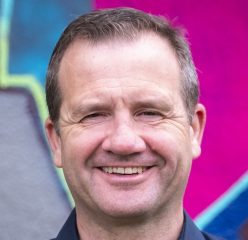
Here is an interesting quote from Adrian Rogers that I think should be considered by the governments of the world as they try to figure out how to help the poor, especially during these tougher times
“You cannot legislate the poor into freedom by legislating the wealthy out of freedom. What one person receives without working for, another person must work for without receiving. The government cannot give to anybody anything that the government does not first take from somebody else. When half of the people get the idea that they do not have to work because the other half is going to take care of them, and when the other half gets the idea that it does no good to work because somebody else is going to get what they work for, that my dear friend, is about the end of any nation. You cannot multiply wealth by dividing it”
Of course governments have an important role to play in the fair distribution of resources, but when the creators of wealth feel exploited it might lead to the situation where the rich increasingly find innovative ways to hide their wealth from the governments.
In the press and development circles there is now increasingly discussions about addressing market failures (cases where markets do not allocate goods in socially optimal ways), but what is not discussed are cases where government failures lead to the poor getting poorer, or staying poor. A simple example is the topic of good quality public education. In todays connected economies government failures in education disproportionately affects the poor, resulting in the poor being trapped. At some point the wealthy may react by saying that they should not be held accountable to continued failures (ignorance or denial) by the public sector, leading to a diversion of profits.
Some of the readers of this blog may wonder why I have been so silent in the last month. Those that know me personally were probably aware of the sudden death of my friend and business partner, Jorg Meyer-Stamer. To see how much Jorg mattered in the development community, take a look at the orbituary site that we created.
I am still in shock that Jorg is no longer around. He was such an important force of motivation and inspiration in my world. It all started a few years ago when I was still employed in a GTZ programme in South Africa. Jorg was our leading service provider. At first I found arguing with Jorg exhausting, but over time I started to look forward to the mental challenges that he would pose to me. For a long time I had a feeling that he did not like many of my ideas, like my passion for business services or market failure. Over time our relationship evolved and become more of a mentor relationship, with Jorg constantly challenging me to think my ideas through, or to try harder to connect concepts that were not connected. We started working on some of my ideas together and I realised that he was always very interested in my ideas, and wanted me to follow my intuition with some deeper exploration. As time went by this mentorship relationship evolved into a deep friendship. Jorg did not treat me like a student (and fact he hardly ever did), but as an equal. When I announced my departure from GTZ Jorg immediately urged me to join mesopartner, the international though leader on territorial development.
Together, Jorg and I have presented more than 40 training events or sessions. Over time we became so
Jorg in action
accustomed to each other that I could almost predict his next move, and he mine. We did not always agree on everything, but allowed each other the space for personal interpretation. Many people commented on how well we worked together as a team. We always evaluated ourselves critically after each training, and worked hard on improving all areas of our joint-performance. This means that even when we presented our favorite sessions, such as “market failure” or “stimulating competitive local economies”, it always felt new and improved from the previous attempts.
In March, when it became apparent that Jorgs cancer was very serious, he urged me to continue the work we started together. I am determined to do this, because I will forever be indebted to the generosity of Jorg. He took all of us with him on a challenging journey to demystify development and to share practical knowledge with the development community.
I miss my weekly Skype conversations with him about how the world is connected, and how many developmental concepts are disconnected. Jorg was an extremely productive person, and e-mails with ideas, new papers, presentations and general correspondence flowed into my inbox day and night. My inbox has gone silent now, and I regret ever complaining about all the e-mails coming from Jorg with more ideas, more work, more thinking. As I am trying to wrap up some of the projects that we initiated together I am intensely aware of the silence.
Yet, I am reminded of Jorg on a daily basis by his legacy of ideas, papers, tools, and models. For many people that have just discovered his papers, or who have just recently learned about PACA, the Hexagon, or some other ideas of Jorg, he is alive in the text and diagrams. Those of us that worked with him can hear his voice in our heads, explaining why quick wins are important, or how the law of unintended consequences works.
Jorg explaining industrial heritate to a group of South Africans in 2008
Do you have any great pictures of Jorg in action? Please submit them to the blogsite!
The intention of this weblog is to raise awareness of issues that do not receive enough attention in the field of territorial development. Furthermore, I am hoping to get a discussion going with other people that are also passionate about economic development through growth and increased competitition.
I spend a lot of my time facilitation discussion, creative thinking and exploration in workshops. Now let us see if it is possible to do the same in the online world of blogs.
I work in the field of economic development, which means I work with people, ideas and problems (see my pages for an overview). My job is to facilitate a process whereby people can think about their situation differently. In most cases, this means that I force people to sit in a workshop and think about their situation creatively. In everyday worklife, thinking out of the box often doesn’t get much time. While people within organisations often get to think things thru because they are confronted by shareholders, collegues or bosses, thinking between organisations often doesn’t take place at all.
I work with private sector and public sector to promote the competitiveness of sectors and of places.
By the way, I also co-host a podcast series with Dr. Jorg Meyer-Stamer on local economic development called the LEDCAST. Some of the most recent shows are accessible on the right hand menu.
I invite you to share your ideas, comments, opinions and pictures on this site!